What is embryo transfer? Preparation, process and important notes
In the 21st century, the IVF (In Vitro Fertilization – in vitro fertilization) method has opened the door of hope for thousands of couples facing the problem of infertility, helping them realize their dream of having children. During the process of making IVF, one of the important stages and of special interest is the embryo transfer process into the ovaries. Embryo transfer is an important turning point in the in vitro fertilization process (IVF), bringing great hope to infertile couples. Let's learn more about this process in detail!
What is embryo transfer?
Embryo transfer is a procedure performed during in vitro fertilization (IVF). This procedure is to insert the embryo after being cultured into the mother's uterus. The embryo selected for insertion can be a fresh embryo or a frozen embryo created in a previous cycle.
The embryo transfer procedure will be performed on days 18 – 20 of the menstrual cycle. Conditions for embryo transfer to the mother's uterus are that the uterine lining must reach a standard thickness of 9 – 10 mm and be in good health.
Embryo transfer process into uterus
The process is divided into 3 stages before, during and after embryo transfer. Specifically as follows:
1. Pre-embryo transfer stage
Prepare the uterine lining
The specialist will instruct female patients to use Estrogen from day 2 of the menstrual cycle to stimulate the growth of the uterine lining and inhibit natural ovulation.
Preparation time before embryo transfer is about 2 -3 weeks.
Estrogen can be used orally, injected, vaginally or transdermally.
About 1 week after taking Estrogen, the patient will have an ultrasound to check the uterine lining and adjust the appropriate Estrogen dosage, while monitoring the development of the lining.
The doctor will continue to instruct the use of Progesterone when the uterine lining reaches the appropriate thickness (8 – 12mm) to create suitable conditions for the embryo to implant.
Prepare the embryo
When the patient's health is ready for embryo placement and pregnancy, the doctor will advise on the appropriate date for embryo transfer, the quality of embryos and the best number of embryos to be transferred to achieve the highest success rate, minimizing the risk of multiple pregnancies.
At this stage, you need to note:
Follow the medication regimen exactly as prescribed by your doctor.
Eat and drink normally on the day of embryo transfer.
You should hold your urine for about 60 minutes before the procedure.
Do not wear jewelry, makeup or perfume when entering the procedure room.
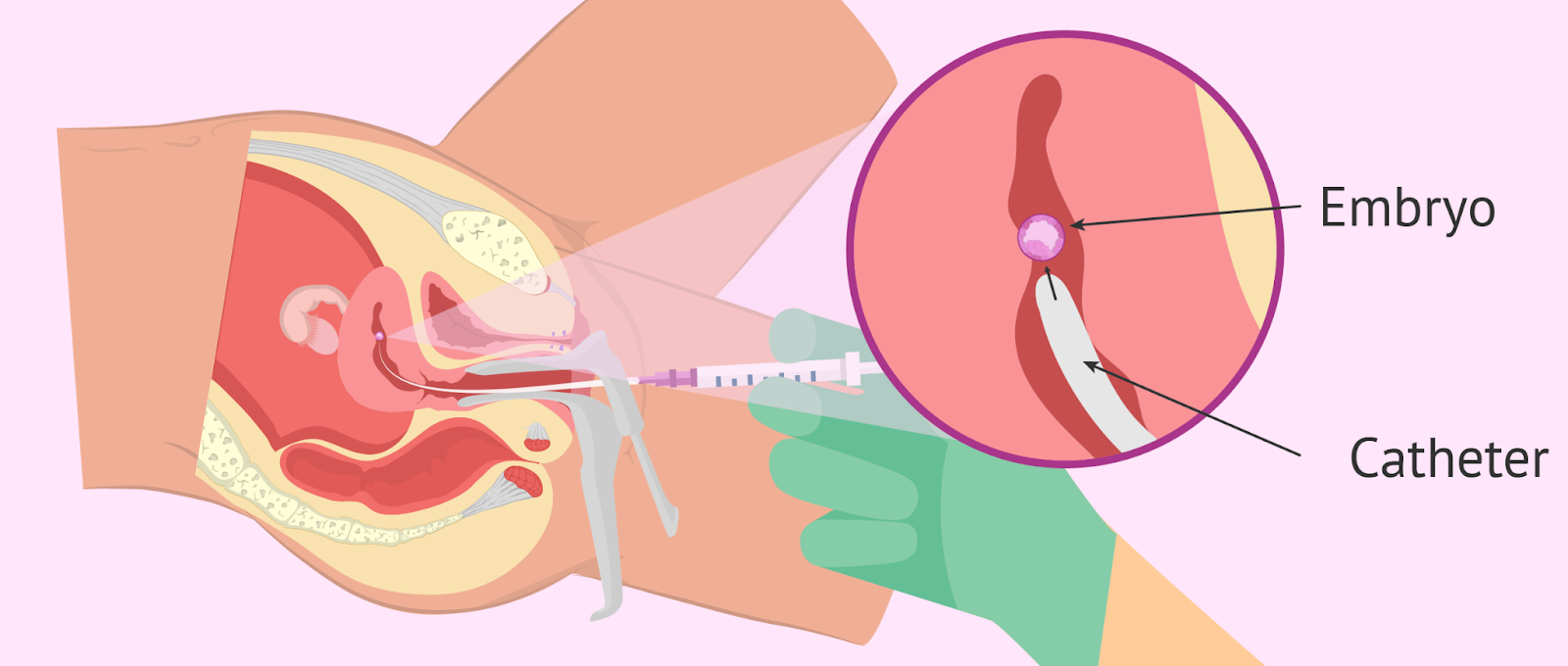
Image of the embryo transfer process
2. Embryo transfer process
The patient was asked by the doctor to hold his urine and lie on the table in the obstetric position. After that, the patient will be given drugs to reduce uterine contractions (depending on the specific case).
The doctor uses antiseptic gloves and uses a speculum to clean the uterus.
They used a cotton swab to wipe the cervix, creating a culture environment for IVF.
Clean the private area and conduct an ultrasound to determine the exact position of the uterus.
The embryo is inserted into the mother's uterus using a specialized catheter.
The doctor inserts the external catheter through the cervix and the internal catheter containing the embryo into the uterus.
Inject the embryo into the uterus gently and accurately.
Remove the catheter, remove the speculum and complete the embryo transfer process, then monitor the patient's health status.
Images of the embryo transfer process through ultrasound
3. After embryo transfer
Once the embryo transfer is complete, you can:
Rest at the clinic for about 1 – 2 hours before going home. When your health is stable, you can go home.
It is necessary to follow some instructions and notes from your doctor to increase the chance of success of the in vitro fertilization procedure.
Follow your doctor's instructions on medication use and lifestyle after embryo transfer. Absolutely do not use other medications without a doctor's prescription.
Walk gently and perform light daily activities, limit vigorous exercise and high-intensity physical activities such as jogging and aerobics until you take a pregnancy test.
You should not lie still and do light exercises to prevent the risk of forming venous thrombosis.
Keep a relaxed, optimistic spirit and avoid anxiety and stress.
Fully supplement the nutrients and vitamins needed for the body.
Monitor for unusual signs and contact your doctor immediately when necessary.
Follow up with your doctor's appointment to monitor your health status and embryo transfer results.
You should not have sex until you take a pregnancy test. If the pregnancy test is positive, you should abstain from sex until pregnancy is confirmed by ultrasound.
The embryo transfer process is not only part of the series of steps of IVF, but also an important milestone that increases hope for couples who want to have children. With a commitment to bringing peace of mind and success to patients, the Reproductive Support Unit IVF Phuong Nam Hospital is always willing to support and accompany each couple's journey to find happiness.
Should you transfer fresh embryos or freeze them: which option is right for you?
Embryo transfer is an important step in the IVF process (IVF), marking the journey of placing the embryo into the mother's uterus with the hope of a successful pregnancy. Currently, there are two popular embryo transfer methods: fresh embryo transfer and frozen embryo transfer, each method has its own advantages and disadvantages. So, should I transfer fresh embryos or freeze them? Let's find out in detail!
Should you transfer fresh embryos or freeze them: Which option is right for you?
Before finding the answer to the question: "Should I transfer fresh embryos or freeze them?" Let's find out the advantages and disadvantages of each of these embryo transfer methods!
What is fresh embryo transfer?
Fresh embryo transfer is the process of placing an embryo that has been fertilized in a laboratory into the mother's uterus 3-5 days after oocyte retrieval.
Advantage:
Taking advantage of the natural environment of the uterus, helping the embryo easily implant.
More cost-effective than frozen embryo transfer because there is no need to preserve the embryos.
Minimize the risk of embryo damage due to the thawing process.
Disadvantages:
Puts pressure on the mother because she has to perform many steps continuously in one cycle.
Not suitable for cases where the mother has ovarian hyperstimulation or other health problems.
Fresh or frozen embryo transfer will have its own advantages and disadvantages
What is frozen embryo transfer?
Frozen embryo transfer is the process of placing a fertilized and cryopreserved embryo into the mother's uterus.
Advantage:
Allows doctors to better control the timing of embryo transfer, ensuring the uterine lining is in an optimal state for the embryo to implant.
Reduces the risk of ovarian hyperstimulation for the mother.
Multiple embryo transfers can be performed from cryopreserved embryos.
Disadvantages:
The cost is higher than fresh embryo transfer due to the need to preserve the embryo.
The embryo can be damaged during the thawing process. However, with current vitrification techniques, the possibility of embryo damage is very low.
The process of preparing the uterine lining is more complicated.
Frozen embryo transfer is currently more popular than fresh embryo transfer
So, should I transfer fresh embryos or freeze them? The trend of freezing in infertility treatment
Frozen embryo transfer technique is gradually becoming a trend in infertility treatment, replacing the traditional fresh embryo transfer method. The reason for this change comes from the outstanding advantages of the frozen embryo transfer process. Specifically as follows:
1. Health benefits for women
Limit the risk of ovarian hyperstimulation: Ovarian hyperstimulation is a dangerous complication that can occur after oocyte retrieval. Frozen embryo transfer gives doctors time to monitor and adjust hormones, minimizing this risk.
Psychological recovery: The process of ovarian stimulation and oocyte retrieval can cause psychological pressure for women. Frozen embryo transfer allows them time to rest and recover physically and mentally before embryo transfer.
2. Increase fertilization efficiency
Optimal uterine lining preparation: With frozen embryo transfer, doctors can control the time of embryo transfer to ensure the uterine lining reaches the ideal thickness and conditions for embryo implantation.
Increase cumulative pregnancy rate: Frozen embryo transfer helps effectively use leftover embryos after IVF, increasing the chance of pregnancy after each embryo transfer.
3. Cost and time benefits
Cost savings: Frozen embryo transfer helps minimize the number of ovarian stimulation times, saving the cost of treating IVF from the beginning.
Financial and work preparation: Couples have more time to prepare financially, work and mentally for the upcoming arrival of a little angel.
Frozen embryo transfer brings many benefits to both the woman's health, treatment effectiveness and cost. This is an option to consider for couples who are having infertility problems.
However, choosing whether to transfer fresh or frozen embryos will depend on many different factors such as the woman's age, health status, embryo quality, risk of complications, etc. The doctor will advise and recommend the most suitable method for each case.
Are You Ready for Your Journey to Parenthood?
Let IVF Phuong Chau Sai Gon accompany your family on this joyful journey. Our specialized medical team is always ready to support you 24/7.




 Fertility Center accredited to international RTAC & JCI quality standards in Ho Chi Minh City