Intrauterine Insemination (IUI) placing specially prepared, highly motile sperm directly into the uterus at the optimal ovulation window.
The Role of the HyFoSy Method – Fallopian Tube Patency Assessment Using Contrast Foam
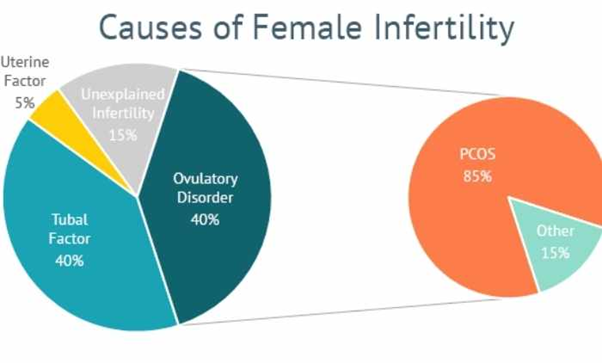
Fallopian tube pathology is one of the most common causes of female infertility, accounting for approximately 40% of female subfertility cases. Accurately assessing tubal patency and identifying tubal lesions using advanced diagnostic methods like HyFoSy plays a pivotal role in infertility evaluation and treatment planning.
Figure 1. Causes of female infertility
Methods for Evaluating Fallopian Tube Patency:
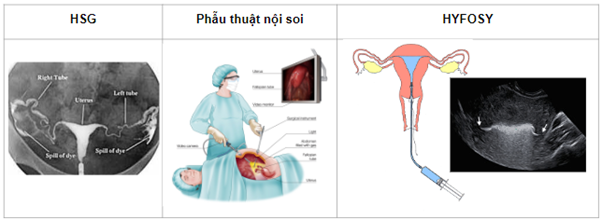
Currently, three primary diagnostic methods are utilized to evaluate tubal patency:
Laparoscopic Surgery: Considered the gold standard for evaluating the uterine cavity and fallopian tubes, offering both definitive diagnostic capability and simultaneous therapeutic intervention for identified lesions. However, laparoscopy is associated with high procedural costs, significant invasiveness, potential surgical complications (intra-abdominal hemorrhage, bowel/organ injury), and general anesthesia risks, making it unsuitable as a first-line diagnostic modality.
Hysterosalpingography (HSG – X-ray of Uterus and Fallopian Tubes): A widely utilized, minimally invasive technique with lower costs than laparoscopy. However, patients frequently experience painful uterine cramping post-procedure, and are directly exposed to ionizing radiation and risks of iodinated contrast medium allergic reactions.
Hysterosalpingo-Foam Sonography (HyFoSy): An innovative ultrasound technique that provides diagnostic accuracy for tubal patency comparable to HSG. It is exceptionally patient-friendly, affordable, significantly less painful than HSG, and completely free of ionizing radiation exposure.
Figure 2. Methods for evaluating fallopian tube patency
Fallopian Tube Contrast Foam Ultrasound (HyFoSy)
–
HyFoSy is a dynamic ultrasound technique that introduces an echogenic, biocompatible foam contrast agent into the uterine cavity via a fine transcervical catheter, enabling real-time ultrasound tracking of foam transit through both fallopian tubes.
HyFoSy provides comprehensive insights into tubal patency and can be seamlessly combined with saline infusion sonohysterography (SIS) to evaluate uterine cavity architecture (detecting submucosal fibroids, endometrial polyps, and intrauterine adhesions), offering a holistic evaluation of the female reproductive system for precise diagnosis and targeted treatment.
– Key Advantages:
Diagnostic tubal patency accuracy comparable to HSG
Significantly less painful and well tolerated
Reasonable and cost-effective
Completely radiation-free (no X-ray exposure)
Rapid procedure duration
Simple, safe, and minimally invasive technique
– Optimal Examination Timing:
Performed when menstruation has completely ceased for approximately 2 to 5 days.
– Contraindications:
Confirmed pregnancy or suspected unexcluded pregnancy
Acute pelvic or lower genital tract infection
Active unexplained uterine bleeding
– Post-Procedure Monitoring Following HyFoSy:
Monitor for mild abdominal cramping or light spotting; patients may comfortably return home within 15–30 minutes following the procedure.
Complete all prophylactic medications as prescribed by the attending physician.
Light spotting or spotting-like discharge is a common, normal post-HyFoSy occurrence that typically resolves spontaneously within 2 to 7 days.
Follow up with your reproductive specialist for personalized fertility treatment planning as scheduled.
References
Hysterosalpingo-foam sonography, a less painful procedure for tubal patency testing during fertility workup compared with (serial) hysterosalpingography: a randomized controlled trial- Fertility and Sterility® Vol. 102, No. 3, September 2014
Grigovich M, Kacharia VS, Bharwani N, Hemingway A, Mijatovic V, Rodgers SK. Evaluating Fallopian Tube Patency: What the Radiologist Needs to Know. Radiographics. 2021 Oct;41(6):1876-1896. doi: 10.1148/rg.2021210033. PMID: 34597232.
Are You Ready for Your Journey to Parenthood?
Let IVF Phuong Chau Sai Gon accompany your family on this joyful journey. Our specialized medical team is always ready to support you 24/7.


 Fertility Center accredited to international RTAC & JCI quality standards in Ho Chi Minh City